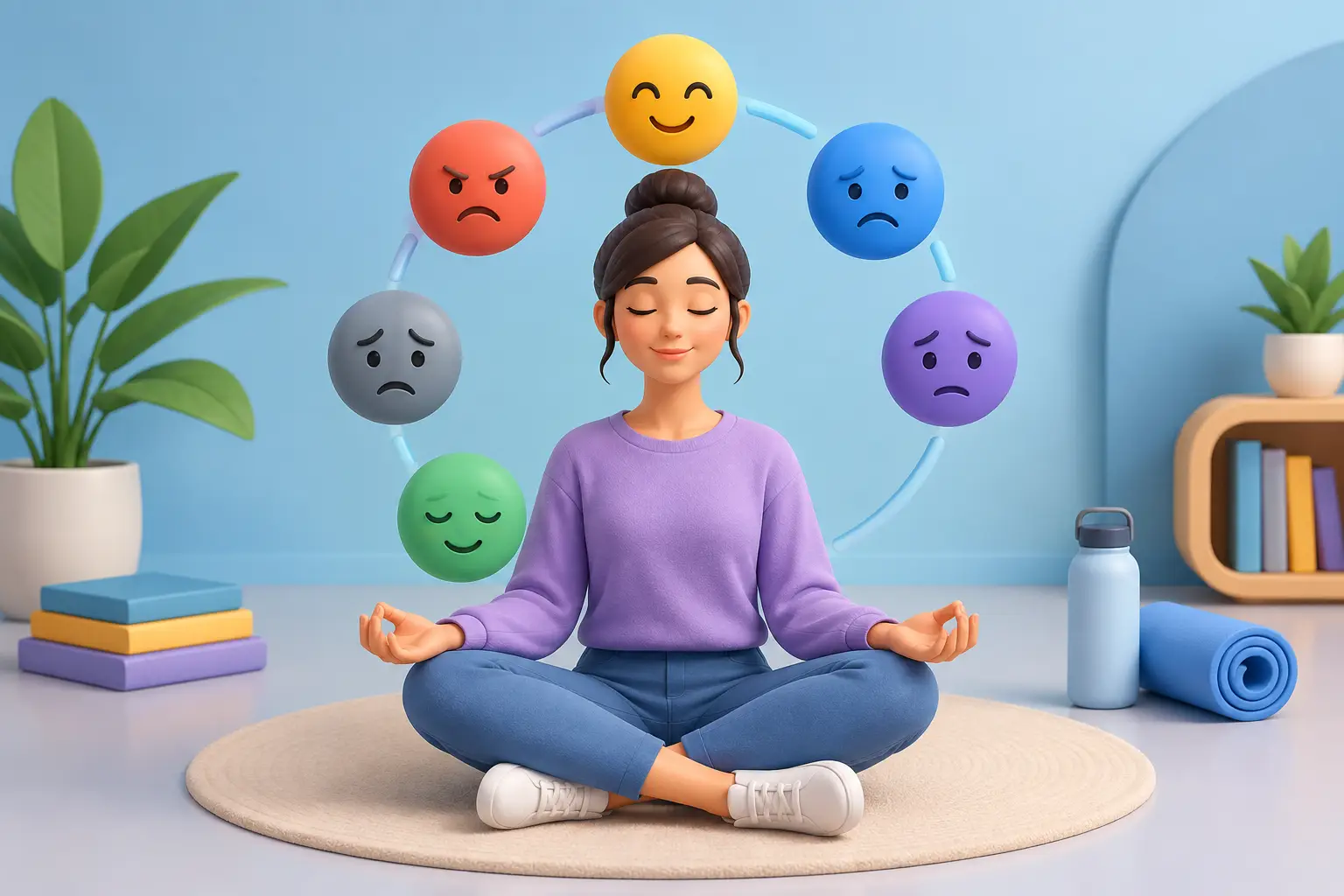
A conversation can change in seconds. A short reply feels dismissive. A partner goes quiet. A family member brings up an old criticism. Before you have fully processed what happened, your body is already reacting - your chest tightens, your thoughts race, and you feel pressure to fix, explain, withdraw, or fight.
A guide to emotional regulation is not about becoming detached or pretending that painful behavior does not affect you. It is about creating enough space between the feeling and the response that you can understand what is happening, choose your next step, and stay connected to your own judgment.
What emotional regulation actually means
Emotional regulation is the ability to notice an emotion, understand what may be driving it, and respond in a way that fits the situation and your values. It does not mean every reaction will be calm. Anger can point to a crossed boundary. Sadness can signal loss or disappointment. Anxiety can alert you to uncertainty or risk.
The goal is not to make emotions disappear. The goal is to prevent an intense emotion from making every decision for you.
This distinction matters in relationships. If someone repeatedly lies, humiliates you, ignores stated boundaries, or uses your emotional reactions against you, better regulation is not a requirement to tolerate more. It can help you see the pattern more clearly and decide what protection, distance, support, or boundary is needed.
A guide to emotional regulation starts with the body
People often try to reason their way out of a strong reaction while their nervous system is still on alert. That is difficult because the body tends to react before the mind has sorted through the facts. You may interpret a neutral message as cold, read silence as rejection, or say something sharp because your system is treating the moment as urgent.
Start by identifying your early signals. These can include a clenched jaw, shallow breathing, heat in your face, a knot in your stomach, a need to send several messages, or an urge to leave without explaining why. Your signals are personal, but they are often consistent.
When you notice them, use a brief reset before continuing the interaction. Slow your exhale, place both feet on the floor, drink water, step outside, or name five things you can see. These actions may sound simple, but they help interrupt the body’s alarm response. You are not solving the relationship issue in that moment. You are giving yourself a better position from which to address it.
If the conversation is escalating, a pause can be more constructive than pushing through. Try: “I want to talk about this, but I am too activated to do it well right now. I need 20 minutes, and I will come back at 7:30.” A pause works best when it includes a clear plan to return. Leaving indefinitely can feel like avoidance or punishment, especially in an already tense dynamic.
Separate the trigger from the story
A trigger is the immediate event: your friend cancels plans, your sibling does not respond, or your partner says, “You are overthinking this.” The story is the meaning your mind assigns: “I do not matter,” “They are hiding something,” or “Nothing I say will ever be taken seriously.”
The story may be accurate, partly accurate, or shaped by a previous wound. You do not need to shame yourself for having it. You do need to slow down long enough to examine it.
Ask yourself three questions: What happened that I can directly observe? What meaning am I assigning to it? What information would help me know more?
For example, “They have not replied in six hours” is observable. “They are deliberately ignoring me” is an interpretation. The missing information may be ordinary, such as work or family obligations. Or it may fit a larger pattern of disappearing during conflict. Context matters. Emotional regulation is not asking you to give everyone the benefit of the doubt forever. It is asking you to distinguish a single moment from a repeated behavior pattern.
Name the emotion with more precision
“I feel bad” is real, but it does not offer much direction. A more precise name can reduce confusion and show you what you need.
You may be irritated because plans changed, hurt because you felt excluded, anxious because communication became inconsistent, or ashamed because you were criticized in front of others. These emotions call for different responses. Irritation might call for a practical request. Hurt may call for repair. Anxiety may call for more information and time before making assumptions. Shame may call for self-compassion and a clear boundary around disrespect.
It can also help to separate primary and secondary emotions. Anger is sometimes the first feeling you notice, but underneath it may be fear, grief, embarrassment, or helplessness. Saying “I was scared when you stopped responding after we argued” often creates more room for a useful conversation than “You never care about me.”
That does not mean you must disclose every vulnerable feeling to every person. Emotional honesty is valuable when the other person can engage respectfully. With someone who mocks, manipulates, or weaponizes your disclosures, privacy may be the healthier choice.
Choose a response, not just a release
Once the immediate intensity has lowered, decide what response serves the situation. This is where regulation becomes practical.
Sometimes the best response is a direct request: “If you need space after an argument, please tell me when you plan to check back in.” Sometimes it is a boundary: “I will continue this conversation when we can speak without insults.” Sometimes it is no response until you have more clarity. And sometimes it is recognizing that you are trying to resolve a problem alone that requires mutual effort.
A useful structure is to describe the behavior, name the impact, and state what you need next. For example: “When you changed the plan without telling me, I felt dismissed. Next time, please check with me before deciding.” This keeps the focus on an observable interaction rather than a broad accusation about someone’s character.
Your goal is not to phrase every concern perfectly. It is to communicate clearly enough that you can observe the other person’s response. Do they listen, become defensive but return to the issue later, take responsibility, or turn the conversation back on you? Their pattern of response provides information.
Build regulation outside the hard moment
Emotional regulation is easier when it is practiced before conflict. Basic needs are not a complete answer to relationship stress, but lack of sleep, isolation, constant pressure, hunger, alcohol use, and unresolved grief can lower your capacity to pause.
A short daily check-in can make a meaningful difference. Notice what you are feeling, what has been draining your energy, and what interaction is still replaying in your mind. Write a few sentences or speak them privately into a note. The purpose is not to analyze every emotion endlessly. It is to catch patterns before they become a crisis.
You can also review recurring cycles. Perhaps you pursue reassurance when someone pulls away, then feel ashamed for needing it. Perhaps you shut down when conflict gets loud, then return later with resentment. Patterns are not permanent identities. They are learned responses that can be understood and adjusted.
Expose can support this kind of reflection by helping you organize confusing interactions into clearer behavioral patterns. The value is not in finding a label for every difficult person. It is in gaining language for what happened, what repeats, and what you want to do differently.
When regulation is not the whole answer
There are situations where self-regulation alone will not resolve the problem. If you feel afraid of a person’s reaction, are being threatened, isolated, monitored, pressured, or repeatedly blamed for their harmful behavior, focus on safety and outside support. A trusted person, local support resource, or qualified mental health professional can help you think through options privately.
Even in less severe situations, support can be useful when reactions feel overwhelming, old experiences keep showing up in current relationships, or conflict leaves you unable to function. Asking for help is not evidence that you failed to manage your emotions. It is a practical response to carrying too much alone.
The next time an emotion rises quickly, do not ask yourself to be perfectly calm. Ask for one small pause. Notice what your body is doing, separate the facts from the fear, and choose the response that protects both your clarity and your self-respect.


